

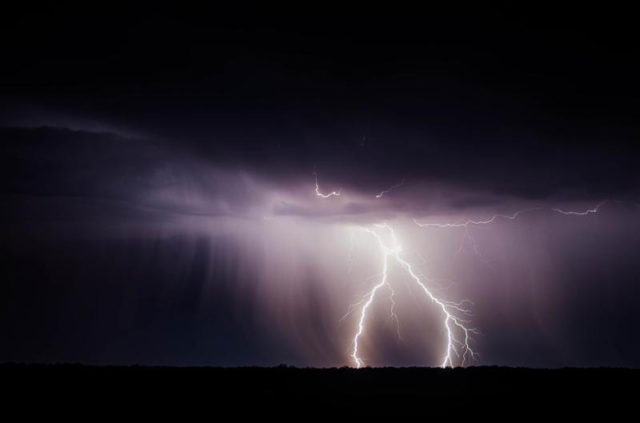
Although Florida is known for its sunshine-filled days, it is also considered the lightning strike capital of the United States. Located between the Atlantic Ocean and Gulf of Mexico, the Sunshine State is a breeding ground for thunderstorms; Florida as a whole experiences thunderstorms nearly one-third of the days in a year. On an annual basis, approximately 1.4 million lightning strikes occur in Florida, which is an average of 24.7 strikes per square mile. While thunderstorms can occur throughout the year, our peak thunderstorm months are during the summer, when it is common to see lightning flashing and hear thunder rolling daily.
With a regular occurrence of thunderstorms, it is important for residents and visitors alike to be aware of the dangers and myths associated with lightning strikes. Together with Santa Rosa County Emergency Management, Lifeguard Ambulance would like to provide some warnings and safety tips in regards to lightning strikes.
Lightning Myths, Facts and Tips:
- Myth: If it is not raining or you cannot see clouds, then you are safe from lightning.
- Fact: Lightning often strikes three to 10 (or more) miles away from the center of the thunderstorm or rain cloud.
- Tip: If you’re going to be outdoors, check the weather first. If thunderstorms are forecasted, rearrange your plans, so that you are not outside during the projected storm time.
- Myth: You can be electrocuted by touching a lightning strike victim.
- Fact: The human body does not store electrical current.
- Tip: If you see someone who has been struck by lightning, call 911 immediately and begin CPR if he or she has no pulse.
- Myth: Rubber tires on a vehicle protect you from lightning by insulating you from the ground.
- Fact: While most cars are safe from lightning, it is the metal roof and metal sides that protect you, not the tires. The electricity goes through the metal frame and to the ground.
- Tip: Do not lean on the doors or windows inside the car during a thunderstorm. Remember, convertibles, motorcycles, bicycles, and open-shelled outdoor recreational vehicles do not protect you from lightning.
- Myth: If you are trapped outside and lightning is about to strike lie flat on the ground or seek shelter under a tree.
- Fact: Laying flat on the ground increases your chance of being affected by potentially deadly ground current and being underneath a tree is the second-leading cause of lightning casualties.
- Tip: If you are caught outside during a thunderstorm, keep moving quickly towards shelter.
Other Lightning Safety Tips:
- Remain alert:
- Monitor the local weather conditions and forecast.
- Keep an eye and ear on the sky: watch for darkening clouds, changes in the wind, flashes of lightning and listen for claps of thunder.
- Seek shelter:
- Being outside during a thunderstorm is never safe.
- Go inside a fully enclosed building, not just a park pavilion or other covered area.
- Stay off corded phones, computers, and other equipment that puts you in direct contact with electricity.
- Avoid plumbing, including sinks, baths, and faucets.
- Plan ahead for outdoor activities:
- Move to a safe place quickly if the sky looks threatening or you hear thunder.
- Don’t wait to finish your game or other outdoor activity. Go indoors immediately upon realizing bad weather is approaching or is already in the area.
- If caught outside with no safe shelter nearby:
- Get off elevated areas such as hills, bridges or highway overpasses.
- Do not lie flat on the ground or shelter under an isolated tree.
- Immediately get out of and away from any body of water, including pools, ponds, rivers, lakes, the gulf, etc.
- Stay away from objects that conduct electricity, such as power lines, electric fences or barbed wire fences.
Remember, if you see someone struck by lightning, call 9-1-1 immediately for medical assistance. Starting CPR may be critically important to saving their lives. Other victims may not require CPR but still need medical attention.